At Papa Joe Farm, nestled in the rural, inland community of Jamul, rows of lettuce, onions, spinach, and fruit trees grow across steep hillsides and rugged, mountainous terrain.
 Many of the farm’s high-demand crops are housed under large, plastic-covered hoop structures. Inside those tunnels, lizards dart between plant beds, while chickens roam in the shade of a nearby pomegranate tree under the watchful eye of Weston, the farm’s golden retriever.
At first glance, the farm may look like an unassuming patch of land tucked in San Diego County’s backcountry. But its lively fields tell a powerful story — one woven with deep family tradition, shaped by dedicated military service, and driven by a commitment to natural farming practices and feeding neighbors in need.
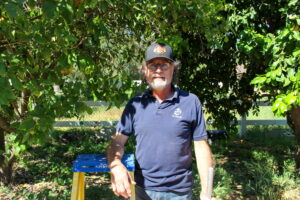
Papa Joe Farm is owned and operated by José Silva, a disabled U.S. Marine Corps veteran whose connection to agriculture stretches across generations, continents, and communities.
His family’s farming roots go back more than four generations, but José developed his own approach to cultivating crops and caring for the land through lessons learned while serving abroad.
That stewardship is foundational to Papa Joe Farm today, guiding the way José farms — from the way he cares for the soil to the nutritious food he grows for his community.
“My work prioritizes soil health, water conservation, and long-term farm viability while building regional food resilience and pathways for new farmers to succeed,” José says.
Through his partnership with the Jacobs & Cushman San Diego Food Bank, José is able to share his harvest with his community and bring fresh, San Diego-grown food to families facing hunger.
While the Food Bank sources food in many ways — from federal programs and food drives to retail partnerships, community donations, and direct purchasing — our work with local farmers provides a special connection between the people growing food in San Diego County and their neighbors who need it most.
 Last year, Papa Joe Farm provided the Food Bank with high-demand items, such as lettuce, mandarins, onions, oranges, and spinach.
That produce wasn’t donated or surplus food given to the Food Bank. It was purchased from José’s farm — a meaningful distinction that ensures families get fresh, nutritious food and local farmers are paid for what they grow.
Papa Joe Farm is just one of about three dozen farms across the region that we purchase locally grown food from. Many, including José, are part of Foodshed Cooperative, a San Diego-based food hub that helps small local farms distribute their products by connecting them with community markets, institutional buyers, and organizations like the Food Bank.
For José, the work is deeply personal, grounded in more than 250 years of his family’s proud agricultural tradition.
After retiring as a Marine Corps colonel, José transitioned into a corporate career before retiring a second time and finding his way back to his roots, eventually taking up farming on his land in Jamul and gradually building Papa Joe Farm from the ground up.
“My farm is a little over an acre,” José says. “So I started small, and then was introduced to Foodshed and expanded from there.”
For small farms, that stable relationship Foodshed’s partnership with the Food Bank provides can make a difference.
Crops take time to grow, and every planting decision carries risk. A farmer may spend weeks or months preparing soil, planting seeds, managing pests, and watering crops before anything is ready to sell. Having a trusted buyer helps farmers plan with more confidence.
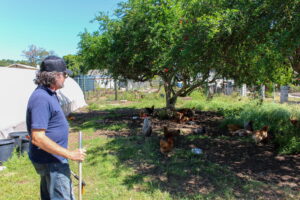 At Papa Joe Farm, that planning is visible in the way José grows. Every aspect of the farm has a role to play — from Weston, the farm’s golden retriever who patrols the property and helps protect the flock, to the chickens and lizards that serve as natural pest management.
José also uses caterpillar tunnels — greenhouse-like structures designed, fabricated, and assembled on the farm — to help protect high-demand produce from weather conditions, shielding them from frost in the cooler months and harsh heat in the summer.
In addition, José’s soil management practices include making his own natural fertilizers, mulch, and compost, rotating crops and planting cover crops to keep soil healthy between harvests, and using worm castings while minimizing tillage to preserve the soil’s ecosystem.
José was first introduced to many of these regenerative growing methods during time spent abroad with the Marine Corps, where he observed farming practices that prioritized soil health long before he knew them by today’s terminology.
“I was fortunate to live in Japan and Korea, and while I was there, I asked a lot of questions,” José explains. “That environment was more no-till and regenerative, but back then, it wasn’t called that. It was just the way of their culture.”
Through his work with Foodshed, he later learned how to put those ideas into practice, with access to tools, training, apprenticeships, and grant-funded incentive programs that help strengthen farm operations.
“Putting all that experience together, along with the education I received from my family, made it a success,” José says.
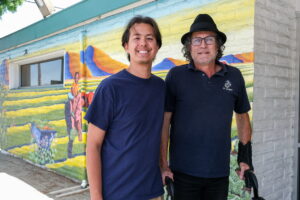 Today, José is a co-owner at Foodshed, where he helps other small farmers access the resources that allowed him to grow his own operation.
He’s also co-founder and vice president of the Farmer Veteran Coalition of California, where he mentors military veterans transitioning into agriculture and advocates for farmer-focused policy and funding.
Alongside this, Papa Joe Farm has earned the “Homegrown by Heroes” designation, recognizing veteran-led farms.
By the time Papa Joe Farm produce reaches our Food Bank warehouse, months of planning, growing, and collaboration have come full circle — keeping food close to home, reducing waste, supporting local livelihoods, and helping neighbors facing hunger access the food they need to thrive.
“We are committed to the communities we serve,” José says.
For José, that local connection is part of what he hopes more people understand.
“There’s a story behind that food,” José says. “It’s from a local farmer, and there’s a story behind their families, rather than a big corporation.”
Fresh food doesn’t move from farm fields to dinner tables on its own. It takes farmers willing to grow for their communities, partners like Foodshed to coordinate purchasing and distribution, and the Food Bank to bring that food to families across the region.
This summer, Papa Joe Farm will be one of the local farms featured in our “Farm to Food Bank” exhibit located in O’Brien Hall at the 2026 San Diego County Fair.
Community members who want to learn more about how fresh food makes its way from local farms to the Food Bank can visit the exhibit at the fair, which is open June 10 through July 5 and is closed Mondays and Tuesdays. To learn more, visit sdfair.com.