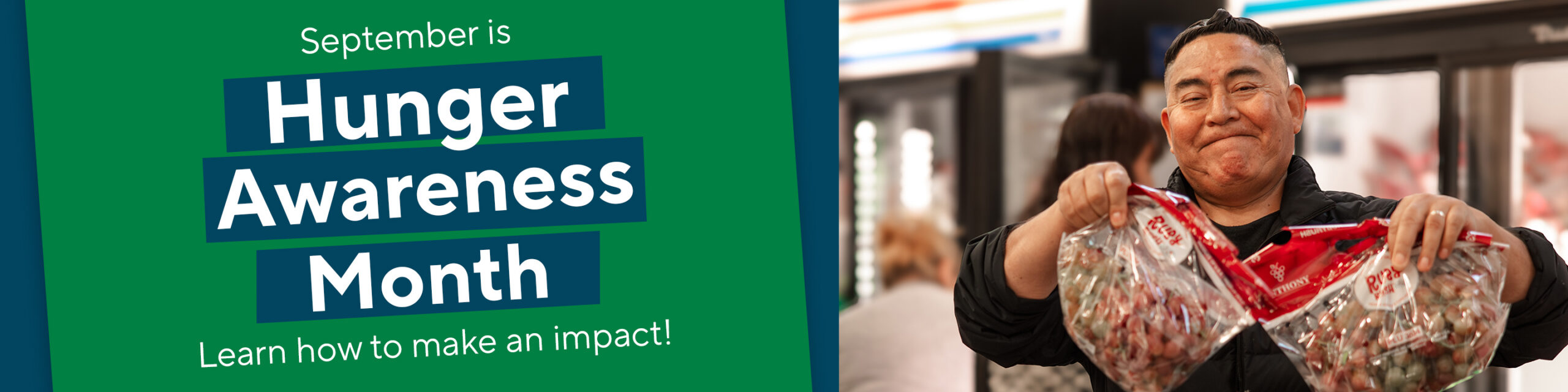





Hunger Awareness Month
Working Families, Hungry Realities
This Hunger Awareness Month, new data makes something clear: work is not always enough to keep food on the table in San Diego County. According to United Way of San Diego County's Real Cost Measure study, part of the statewide Real Cost Measure research from United Ways of California, 97% of local households who can't cover their basic living costs have at least one working adult.
Full time, part time, or juggling more than one job, hunger here doesn't discriminate by employment status. This September, we're asking our community to look past the assumption that a job guarantees stability and to understand what's really driving hunger at home.
97%
of households unable to meet basic costs have at least one working adult
25%
of county residents, including 219,000 children, face nutrition insecurity
$7/hour:
the wage gap San Diego workers face against the national average once cost of living is factored in
The Math Doesn't Add Up
A San Diego County family of four needs more than $116,000 a year to cover basic expenses, according to the Real Cost Measure study — that's the equivalent of three full-time minimum-wage jobs.
Meanwhile, the basics keep getting more expensive. Add rising transportation, grocery, and child care costs on top of that gap, and food becomes one of the few flexible expenses left in a family's budget, which is exactly why it's often the first thing cut.
In Their Own Words
A Good Job Isn't Always Enough
"Just because I am making good money living in San Diego and paying all of the necessary bills, doesn't mean we don't struggle. My rent is about two-thirds of what I make."
— Ashley, single mother and medical records clerk, Food 4 Kids Backpack Program
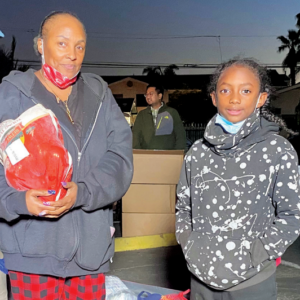
Pay Raises Don't Keep Pace With the Cost of Living
"Most people think that nurses get paid a lot, but that's not the case at all. I have not had a pay raise this year, and I am supporting our entire family."
— Larell, registered nurse and mother of three
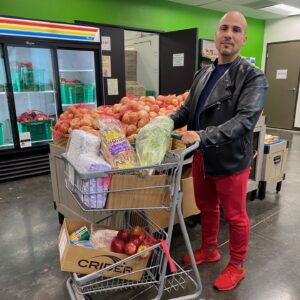
Two Jobs, One Goal: Keeping Food on the Table
"Right now, I am working two jobs to support my family. I work full time as a trainer at a gym, and I drive for Uber."
— Carmello, gym trainer and rideshare driver, Vista
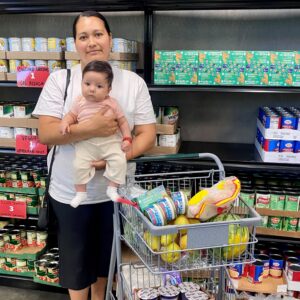
Getting By on One Paycheck
"Getting by on one paycheck is hard. We are finding it more difficult to afford rent, gas, and food."
— Maria, mother of three, North CountyHunger Is a Systems Issue, Not a Personal One

When someone falls short, it's often because rent, child care, and transportation have climbed faster than paychecks. Temporary setbacks, a reduced shift, a medical bill, or a car repair, can be enough to tip a working household into needing help. And the effects don't stay temporary. Children who grow up with unreliable access to food can carry the impacts into their health and education for years.
Our Community Is Stronger When Everyone Has Enough
Food security is the foundation that lets kids focus in school, employees show up for shifts, and neighbors contribute back to the community around them. Every neighbor served, every partner supported, and every advocate who speaks up moves us closer to a county where a paycheck and a full refrigerator aren't mutually exclusive.